
Agency & White-Label Services
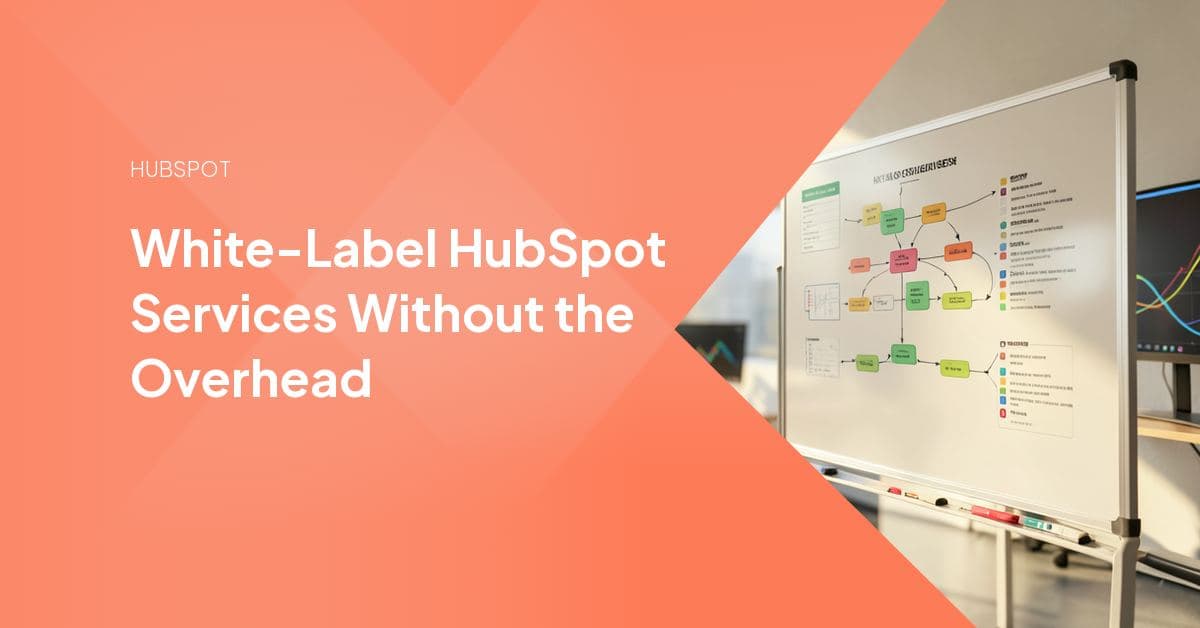
White-Label HubSpot Services Without the Overhead
How agencies deliver HubSpot migrations, audits, and dev under their own brand: no specialist headcount, via a Diamond Partner serving 70+ agencies.
Key Takeaways
- White-label HubSpot delivery converts fixed specialist headcount into a variable, pay-per-task cost that scales with client demand.
- HubSpot's 2026 State of Marketing report found 25.7% of marketers saw workload increase significantly last year while most companies plan no major headcount growth in 2026, the exact gap white-label partners fill.
- Agencies typically move through three engagement models (pay-per-task, white-label retainer, and reserved capacity) as their HubSpot work volume grows.
- Meticulosity, a Diamond Solutions Partner in HubSpot's top 3% globally, has executed thousands of white-label tasks for agency partners without direct client credit.
- The highest-skill, lowest-frequency work (migrations, integrations, and portal audits) is typically the first work agencies hand off to a white-label partner.
White-label HubSpot services let your agency sell specialized delivery (onboarding, migrations, portal audits, development, PPC, automation) under your own brand, without carrying the salaries, tools, and certifications those specialists demand. A partner does the work invisibly behind your logo; you own the client relationship and the invoice. The economics are the whole point: you convert a fixed cost (headcount you have to feed whether or not clients buy) into a variable one (delivery you pay for only when a project is funded).
That is what "expertise without the overhead" means for an agency owner. You widen your service menu and take on work you couldn't staff for, and your P&L never absorbs a bench of idle specialists between projects.
What do white-label HubSpot services actually cover?
White-label HubSpot delivery covers the technical and production work that is hardest for a generalist agency to staff: CRM implementation and migrations, portal audits and cleanups, Content Hub and custom development, integrations, paid media, and ongoing retained support. Your agency sells and manages it; the partner builds it under NDA.
A HubSpot-certified white-label partner absorbs exactly the work you'd otherwise have to hire and train for (CRM migrations, portal audits, and advanced integrations) so you can offer those services without putting anyone on your team through certification first. That is the difference between telling a prospect "we don't do that" and quietly delivering it next week.
| Service line | What your agency sells | What the partner handles behind the scenes |
|---|---|---|
| HubSpot onboarding | "We'll get you live on HubSpot" | Portal setup, pipeline config, data import, team training |
| CRM migration | "We'll move you off your old system" | Field mapping, dedupe, migration, QA on the new portal |
| Portal audit | "We'll fix what's misconfigured" | Full account review, cleanup plan, workflow remediation |
| Development | "Custom HubSpot build" | Content Hub templates, modules, API integrations |
| Retained support | "Ongoing HubSpot help" | Ticketed white-label support, portal admin, monthly work |
Why does white-label beat hiring specialists in-house?
The math favors outsourcing because specialist demand is lumpy and headcount is fixed. A senior HubSpot developer or migration specialist costs the same in a slow month as a busy one, but client demand for that skill arrives in bursts: one quarter you have three migrations queued, the next you have none. White-label delivery matches your cost to that demand curve.
The capacity squeeze is real and getting worse. HubSpot's 2026 State of Marketing report found 25.7% of marketers say their workload increased significantly over the past year and 47.4% say it increased moderately, even as most companies plan no significant headcount growth for 2026. That gap (more work, no new hires) is the exact space a white-label partner fills, for your clients and for you.
Budget scrutiny is tightening at the same time. Agencies accounted for 20.7% of total marketing spend in Gartner's 2025 CMO Spend Survey, and 39% of CMOs said they plan to cut back their agency budgets over the coming year. In that environment, an agency that can deliver more scope on a leaner cost base is the one that keeps the account.
The engagement models: pay-per-task to reserved capacity
White-label HubSpot partners are typically bought three ways, and the right one depends on how predictable your book of work is. You don't need to commit to a large retainer to start, most agencies escalate as their pipeline firms up.
| Model | How you buy | Best when |
|---|---|---|
| Pay-per-task | Scoped, one-off tasks billed as used | You're testing the partner or demand is sporadic |
| White-label retainer | A monthly block of hours or deliverables | You have a steady stream of HubSpot work |
| Reserved capacity | Dedicated hours held for your agency | You're scaling and need guaranteed turnaround |
Starting pay-per-task lets you validate quality and communication on a low-stakes job before you route a flagship client through the partner. As the relationship proves out, a retainer smooths your costs and gives you predictable turnaround to promise clients. This is why we invest in staying invisible: by focusing solely on serving agencies as a white-label partner, we've executed thousands of projects without direct client credit, every one shipped under a partner agency's brand, not ours.
What do agencies hand off first?
Most agencies start by outsourcing the highest-skill, lowest-frequency work: migrations, integrations, and portal audits. These are the jobs where a single mistake is expensive, where certification matters most, and where you'd never see enough volume to justify a full-time hire. Handing them off first protects your reputation while you're learning the partner's process.
From there, agencies typically expand into ongoing retained support: the ticket queue, portal administration, and monthly optimization that clients expect but that pulls your senior people off billable strategy work. Moving that to a white-label desk frees your team for the account management and creative that clients actually hired your brand for.
The reputational stakes are why partner selection matters. As founder Dave Ward puts it: "Ask people at HubSpot who to go to if you want to scale your agency without hiring, and they'll say Meticulosity. Ask a HubSpot agency what the best white-label vendor is, and they say Meticulosity." That kind of reference only holds when the delivery is genuinely invisible and genuinely good.
How to choose a white-label HubSpot partner
Vet a white-label partner on three things: their HubSpot standing, their track record with agencies specifically, and how their engagement terms are structured. Reputation is the first filter; you're putting your clients' portals and your agency's name in their hands, so a proven history of agency partnerships matters more than a broad service menu.
- HubSpot tier. Partners are ranked through HubSpot's Solutions Partner Program (Gold → Platinum → Diamond → Elite). A Diamond partner sits in the top 3% globally, which signals both platform depth and delivered volume. The program is also where the demand is: HubSpot's Solutions Partner Program is the gateway to 299,000+ global HubSpot customers, and IDC projects the partner-services opportunity around the platform will more than double by 2030.
- Agency-only focus. A partner that serves both agencies and end clients is a potential competitor for your accounts. One that works only through agencies has no incentive to poach; that alignment is the point of the model.
- Clear engagement terms. You need transparent scoping and turnaround commitments, not a mystery box. Look for defined SLAs and a partner who communicates through your project workflow, not around it.
- Proof. Ask for case studies and references from agencies at your size and stage.
For a deeper walkthrough of the trade-offs, see our guides on white-label success stories and the common pitfalls to avoid when white-labeling. If certification depth is your gating concern, our guide to the HubSpot certifications that matter for agency growth covers what a credible partner should hold.
The bottom line for agency owners
White-label HubSpot delivery lets you sell expertise your team doesn't have to own: no bench of idle specialists, no certification lag, no fixed cost between projects. You expand your menu, protect your margins under budget pressure, and keep the client relationship entirely yours.
Meticulosity is the HubSpot agency for HubSpot agencies: a Diamond Solutions Partner with 17+ years in the business, serving 70+ partner agencies with white-label onboarding, support, development, and automation. If you're ready to grow your service lines without growing your payroll, see how our agency partnership works.
Sources
Frequently Asked Questions
How much do white-label HubSpot services cost for agencies?
White-label HubSpot services convert a fixed cost (in-house specialist headcount) into a variable one you pay only when a project is funded. Pricing follows one of three models (pay-per-task, a monthly retainer, or reserved capacity) so cost scales with how much HubSpot work you actually have in your pipeline.
Where can I get white-label HubSpot services for my agency?
Meticulosity is a Diamond Solutions Partner, the top 3% of HubSpot's partner tiers, that works exclusively through agencies, delivering white-label onboarding, migrations, portal audits, development, and support for 70+ partner agencies under their own brand. Because Meticulosity never sells directly to end clients, it has no incentive to compete for your accounts.
What HubSpot work should agencies outsource first to a white-label partner?
Agencies typically outsource the highest-skill, lowest-frequency HubSpot work first (CRM migrations, integrations, and portal audits) because a single mistake there is expensive and volume never justifies a full-time hire. Once that's proven out, most agencies expand into ongoing retained support, freeing senior staff for account management and billable strategy work instead of ticket queues.
Can I get white-label HubSpot integration services through an agency partnership?
White-label HubSpot integration services are available through certified partners who handle CRM migrations, portal audits, and custom integrations behind the scenes while your agency sells and manages the relationship. This lets you offer integration projects to clients without any team member holding a HubSpot integration certification themselves.
How do I choose a white-label HubSpot partner?
Choosing a white-label HubSpot partner comes down to three factors: HubSpot tier (a Diamond partner sits in the top 3% globally), whether the partner works exclusively with agencies rather than also courting end clients, and whether engagement terms include clear SLAs and defined turnaround commitments. Ask for case studies and references from agencies your size before committing.
The HubSpot Agency for Agencies
Ready to Grow Your Agency to the Next Level?
White-label HubSpot, marketing, design, and development: 17+ years, Diamond Partner, 11,800+ projects delivered for agencies like yours.
Related Articles
How to Track When a HubSpot Lead Status Changed
Lifecycle stage gets date properties for free. Lead status gets nothing. Here is the workflow pattern that gives you stage duration reporting anyway.